
Queens shows both matter – and one doesn’t work without the other.
Concannon Brief
May 18, 2026

Immigration is widely discussed. Assimilation is not.
That wasn’t always the case. In Queens, for generations, the two went hand in hand. People arrived from different parts of the world, settled into neighborhoods that were already changing, and over time became part of a shared civic life. That process was not perfect or always smooth, but it was consistent. It worked because adaptation was expected, reinforced, and, in many ways, unavoidable.
A look at the borough’s history, captured in works such as Queens: A Pictorial History, reveals a pattern that repeats across decades. Rural villages became transit hubs. Transit hubs became neighborhoods. Neighborhoods changed again as new populations arrived. Each wave brought its own customs and traditions. Over time, those differences did not disappear, but were woven into a broader civic framework.
In practical terms, assimilation did not mean the loss of identity. It meant participation, learning how to function within a shared system while preserving culture, family, and tradition. In Queens, identity was not erased; it was layered.
There is a reason this process worked.
In the early 20th century, a resident could step onto a trolley or train and, for a few cents, travel miles beyond his neighborhood. That simple act created more than convenience; it created exposure. People worked together, learned from one another, and gradually built common ground. The systems of daily life, schools, workplaces, and transit did more than serve practical needs. They brought people into contact, and over time, that contact became community.
But something about the present moment feels different.
A Question Worth Asking
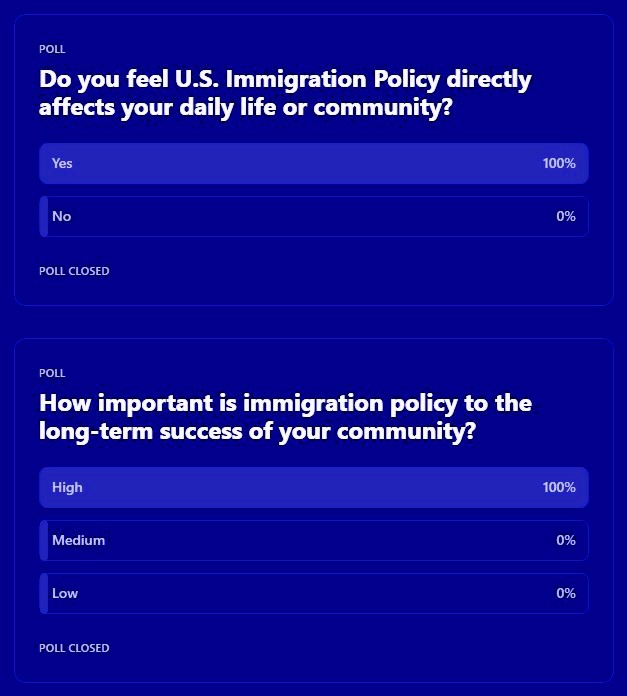
The question is no longer abstract. It is personal – and it affects how communities function over time.
The pace of change has accelerated. Advances in transportation, from global air travel to the reach of major airports, have made movement faster and more continuous. Communications technology allows people to remain closely connected to their countries of origin, maintaining language, media, and social ties in real time. Economic forces concentrate rapid change in specific areas. Where earlier generations experienced a gradual transition is no longer as unavoidable. It is, to a greater degree, a matter of choice.
That shift matters.
In earlier generations, assimilation was supported by shared institutions, schools, workplaces, civic organizations, and public life. These created natural points of connection. Today, those institutions still exist, but their influence is less central, and their ability to bring people together is less consistent.
There is also a more difficult reality that cannot be ignored. When immigration policy is unclear or inconsistently applied, it creates uncertainty, not only for those arriving but for the communities receiving them. Stability has historically been a key ingredient in successful assimilation. People are more likely to engage, invest, and participate when expectations are understood and the rules are consistent. When that clarity is lacking, the process becomes less predictable. This is not simply a question of enforcement or politics. It is a question of whether the conditions that have historically supported assimilation are being maintained.
A More Difficult Conversation
The current immigration debate often unfolds along familiar lines. On one side are those who emphasize compassion, opportunity, and the long-standing role of immigration in shaping the country. On the other hand are those who point to the importance of order, legal structure, and the capacity of communities to absorb rapid change.
Both perspectives reflect legitimate concerns. A system that closes itself off risks losing the energy and contribution that immigration has historically provided. A system that lacks clarity or consistency risks creating uncertainty, for those arriving and for the communities receiving them.
The deeper question, however, is not which side is entirely right. It is whether the conditions that have historically made immigration successful, stable expectations, shared institutions, and a clear pathway to participation, are still in place.
Assimilation has always depended on more than arrival. It has depended on structure, expectation, and participation. When those elements are clear, integration follows. When they are not, the outcome becomes less certain.
Leadership and the Work of Assimilation
Assimilation has never been a passive process. It has always required leadership, both from those arriving and from the communities they enter. In earlier generations, that leadership was often embedded in institutions: schools that taught language and civic norms, workplaces that brought people together, and local organizations that created a sense of belonging.
Today, the question is more direct: what are we doing to make that process work?
Leadership, in this context, is not about policy alone. It is about setting expectations and creating opportunities for engagement. For those arriving, it means taking steps toward participation, learning the language, understanding the norms of civic life, and entering the workforce with the intention of contributing. For established communities, it means maintaining institutions that bring people together and remaining open to new contributions without lowering the standards that hold a community together.
Assimilation does not occur in isolation. It occurs through interaction, and interaction requires structure.
At its best, this process has been tied to something larger: the American Dream, the idea that individuals, regardless of where they begin, can build a stable life, contribute to their community, and see their children move forward with greater opportunity. In Queens, that promise was not abstract. It was visible in neighborhoods that grew from modest beginnings into stable, upwardly mobile communities shaped by successive generations.
That dream has always required more than arrival. It has required participation.
Queens offers a long record of this two-way process. The borough has been shaped not only by those who arrived, but by what they introduced: new businesses, traditions, and forms of community life that, over time, became part of the local norm. The result was not fragmentation, but expansion.
Still, that outcome was never guaranteed. It depended on engagement, on people choosing, and often needing to move beyond their immediate circles. It also depended on openness from those already established, a willingness to accept that communities would evolve and that change, while sometimes disruptive, could also be constructive.
As the nation approaches the United States Semiquincentennial, this question takes on added weight. Anniversaries are not just celebrations; they are checkpoints. They invite reflection not only on what has been built, but on how it was built. The American story has always included immigration. Less often acknowledged, but just as essential, is the process that followed, assimilation, linking individuals to a shared civic life while allowing space for cultural identity to endure.
Queens provides a local example of that national pattern. Over generations, people arrived, adapted, and became part of something larger than themselves. That outcome was not accidental. It was the result of expectation, institutions, and shared participation.
Queens did not become what it is by accident. It became what it is because people did more than arrive, they adapted, participated, and, over time, became part of a broader civic whole. Immigration was the beginning of that process. Assimilation was what made it work.
If we are willing to talk seriously about one, we should be equally willing to talk about the other.
I’m on Substack: check it out and leave your thoughts