By Phil Orenstein
As America celebrated the 250th Anniversary of the Declaration of Independence, my wife Alma and I joined approximately 150,000 patriots on the National Mall in Washington, D.C., for the historic Freedom 250 Salute to America celebration. What follows is my personal account of a day that renewed my faith in the American people and reminded me that the Spirit of 1776 is still very much alive.
Photo Credit Note: All photographs are by the author unless otherwise noted.
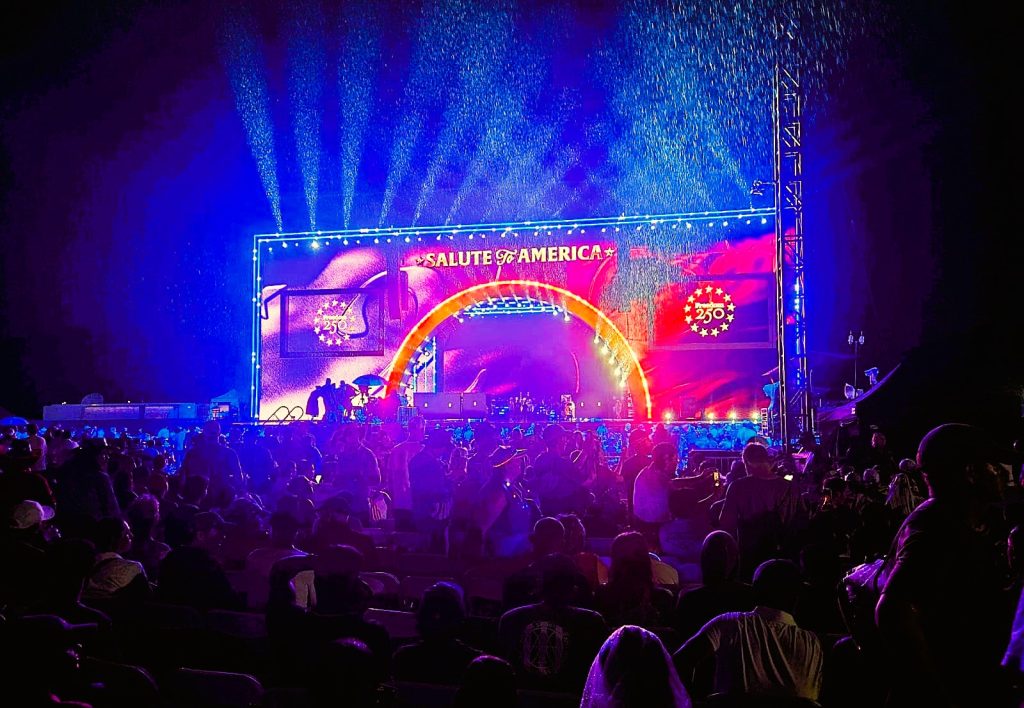
On July 4, 2026, my wife, Alma, and I had the privilege of taking part in the historic celebration of America’s 250th birthday at the Washington Monument on the National Mall in Washington, D.C.
“We are in heaven.”
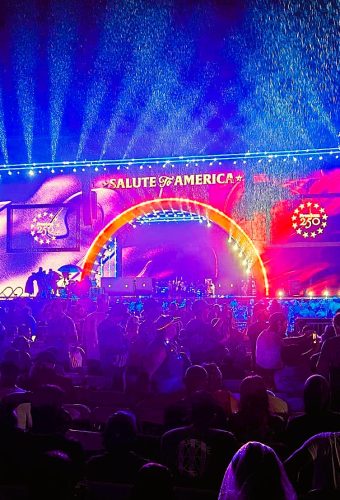
Those were the words that best captured the overwhelming feeling that came over us as we approached the brilliantly illuminated Salute to America stage that evening. Walking through a light rain alongside tens of thousands of patriotic Americans, with dazzling lights beaming across the sky, felt almost surreal. The moment reminded me of the biblical Exodus—the Israelites leaving bondage, crossing the Red Sea, and finally entering the Promised Land.