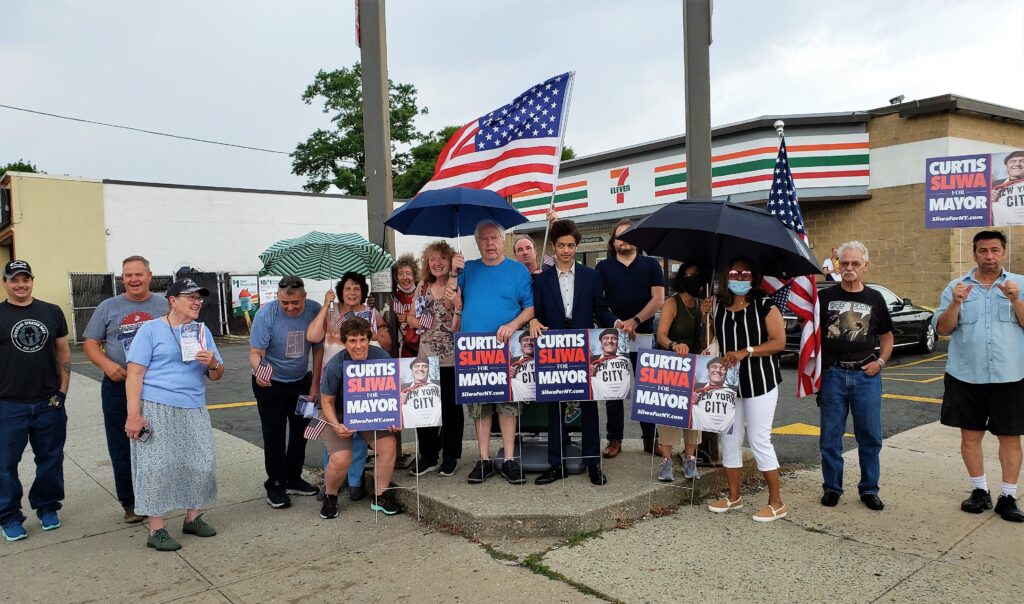
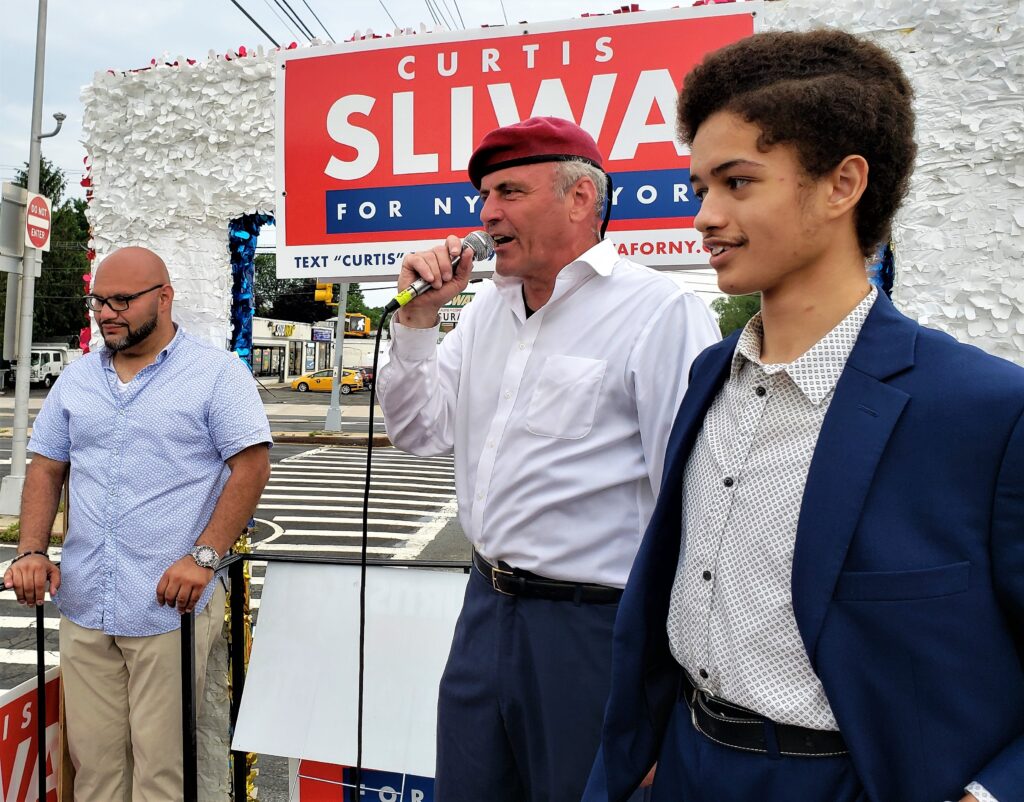
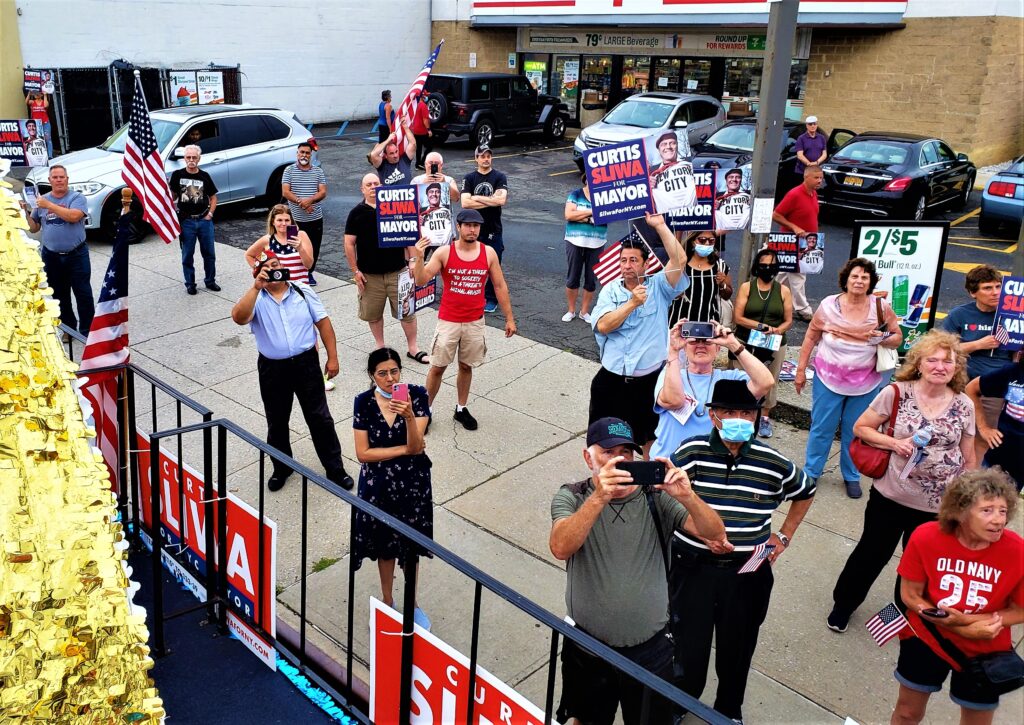
Curtis Sliwa takes on AOC, DSA, and Tiffany Caban, in Astoria to Woodside, Queens
Small businesses get walloped with fines of $100 in Astoria, in this case for a merchant trying to sell watermelons on a hot summer day. There will be no hidden taxes on NYC small businesses with Curtis as mayor!
Curtis pledges to take out AOC and DSA. Come along for the Republican ride into Astoria, Queens where the immigrant community loves Curtis Sliwa because he has been fighting for them for the past 40 years. He is one of them!
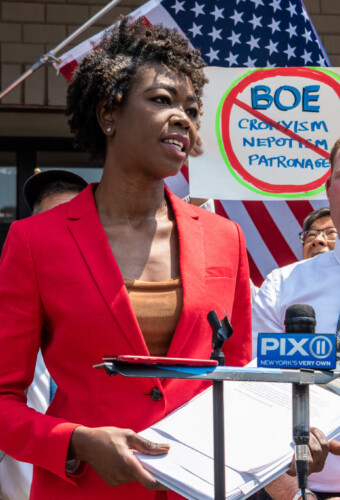
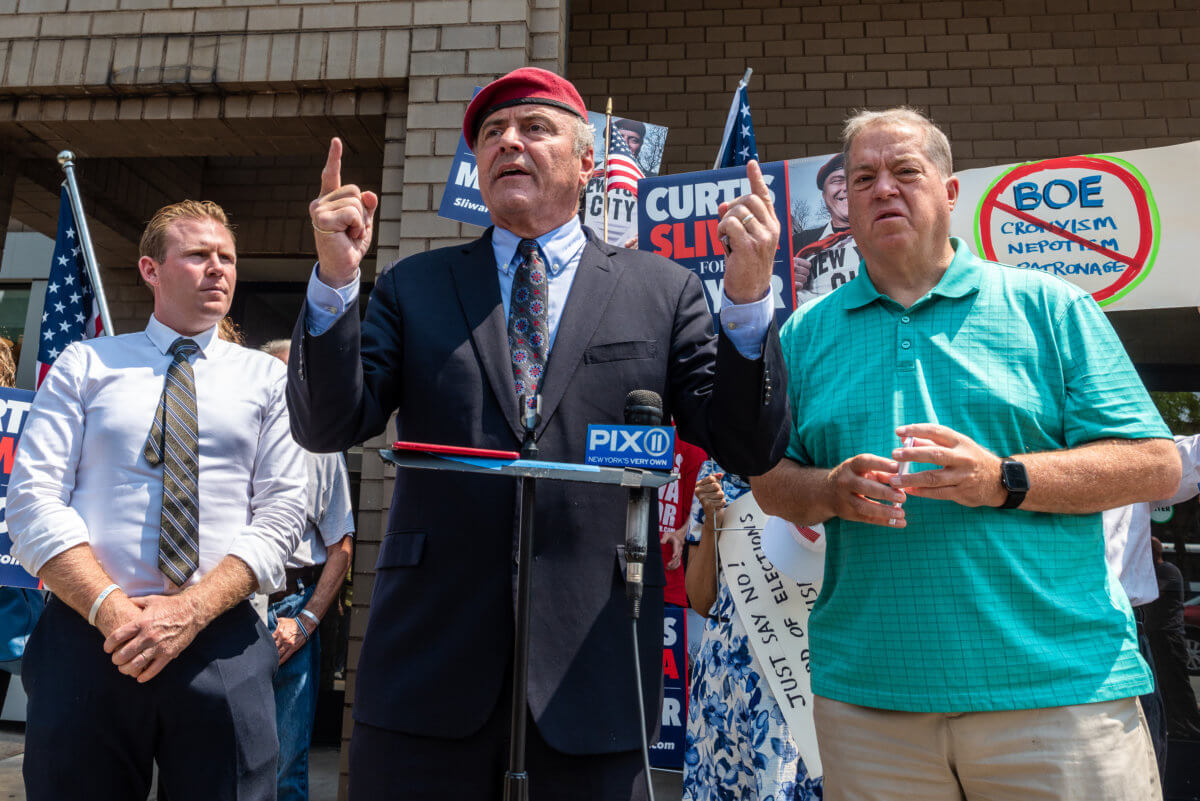
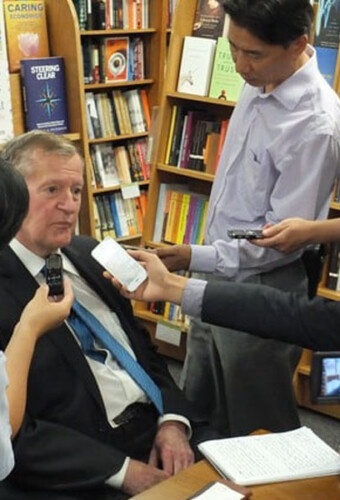
Republican mayoral candidate Curtis Sliwa called for election reform at a press conference outside the Board of Elections office in Queens on July 6. (Photo by Gabriele Holtermann)
After the Board of Elections (BOE) bungled last week’s preliminary ranked-choice voting calculations and mistakingly added over 130,000 test votes to the original ballot count, Republican mayoral nominee Curtis Sliwa called for election integrity reform outside the Board of Elections’ office in Queens on July 6.
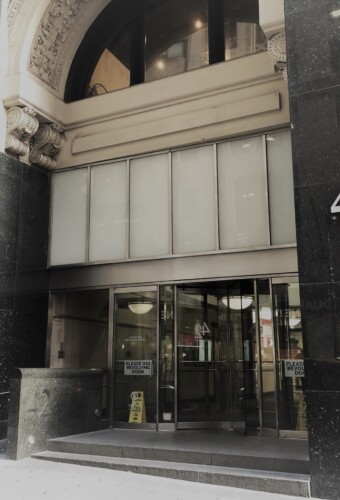
Alongside Republican gubernatorial candidate Andrew Giuliani, the son of former New York City mayor Rudy Giuliani, local Republican candidates and community leaders, Sliwa opened the press conference hosted by the Queens County Republican Patriots pointing to the building behind him.
“Democrats are now experiencing what all voters have experienced, the lack of ballot integrity,” the Guardian Angels founder said. “This particular office was responsible for processing 130,000 test ballots in with all the other ballots that had been filed on election day, that didn’t even include the absentee ballots that they started to count on Monday.”
July 2, 2021 Kate Lemos McHale, Director of Research NYC Landmarks Preservation Commission One Centre Street, 9th Floor – North New York, NY 10007
Re: St. Joseph’s Episcopal Church 217-45 100th Avenue, Queens Village
Dear Ms McHale:
We write to urge speedy action on the Request for Evaluation submitted by Rene C. Hill to landmark the complex of buildings in Queens Village known as St. Joseph’s Episcopal Church. This set of mostly wood-frame, wood shingled buildings built cohesively over a period of almost 100 years and situated on a rural-looking large block of land is too precious to lose, but is currently threatened with demolition.
This year marks our 245th year since we declared independence from Great Britain and became a Sovereign Nation, the United States of America! Let’s celebrate this July 4thas we’ve never celebrated before! Let’s unite in brotherly love, celebrating all the incredible gifts we have received from our resolute founders and the brave men and women who sacrificed, bled, and died to secure our freedoms today.
Let us stand 1776 STRONG as Americans and restore the American Republic! Let this 4th of July be our Battle Cry for Freedom across the land!
As the Left tries to break the hearts and minds of America and America’s children with their Racial Hatred and Divisive Indoctrination….
Let us stand 1776 STRONG, united in American Values, Culture, and Faith. Celebrate Independence Day like it’s 1776!
As the LEFT seeks to silence us at every turn, let’s send the left a clear message.
We love the United States of America! We are proud to be called Americans!
As the LEFT is instituting racism as a tool to gain power over Americans, let us bravely face their racist slurs, used to force our silence and conformity, and let us root this out of American society.
We must stand 1776 STRONG and end this Racist scheme NOW.
We define who we are, through our character and our conduct. In 1968, we fought together to abolish all forms of discrimination in race, color, creed, and sex. We must STAND 1776 STRONG against those on the Left who are promoting hateful propaganda designed to fracture the American identity of individuals, families, and the Judeo-Christian faithful, and consequently erasing 53 years of progress.
Our children are counting on us to STAND 1776 STRONG!
Seven out of ten children are being shamed and labeled as racists by their teachers, administrators, and their peers because they are light-skinned. Seven out of ten children from Christian (70%) and Jewish (2%) households are being labeled as intolerant and bigoted towards others. 70% of Americans are being labeled as racists because of the color of their skin!
We must Stand 1776 Strong; We must Stand Together as One!
The LEFT has progressively propelled our country further and further away from our founding principles. Our values, and the freedoms they afforded us are being systematically erased by their hateful ideology. It is time to reset and restore America to the original heart and purpose of 1776.
The LEFT wants to erase our history, erase our identity, rewrite the false 1619 narrative, and institute the Marxist lies embedded within Critical Race Theory.
We are in a heated culture war. We are standing at the cliff’s edge and must stand our ground, engaging as a healthy Republic, determined not to compromise one more bit of ground. The LEFT is serious; they are playing for keeps, and they are playing all their cards; Are we ready to stand 1776 STRONG and ACT for America?
It’s time to renew our faith, hope, and courage that come from this great beacon of light, life, and liberty delivered to us 245 years ago, on July 4th 1776!
Short on time but able to fund the effort?Become a 1776 STRONG Patriot Donor! Help us build dedicated defenses to preserve America’s culture, sovereignty, and security. When everyone does a little, together we accomplish a lot!
Editor’s note: The heat is now on the NYC Board of Elections, and we are re-releasing “Are Free and Fair Elections Possible” detailing the inner corruption of the free and fair election system at the NYC Board of Elections.
What follows is detailed and factual account of crucial importance to all Americans regardless of political party affiliation, in understanding local, regional, and national elections and what has been corrupting our political election process.
Today, political candidates are blocked from even appearing on the ballot due to the nefarious machinations of political insiders.
This is not a Republican issue or a Democrat issue, but an American issue involving all political parties. It is about democratic participation in our political system. It is how potential candidates do not even reach the ballot box and are thwarted by entrenched political insiders in collusion with Board of Elections executives. Thus, the status quo is maintained. It is the undermining of the foundation of the democratic voting process that we the voters trust, which has been usurped by ten political “commissars” in a room.
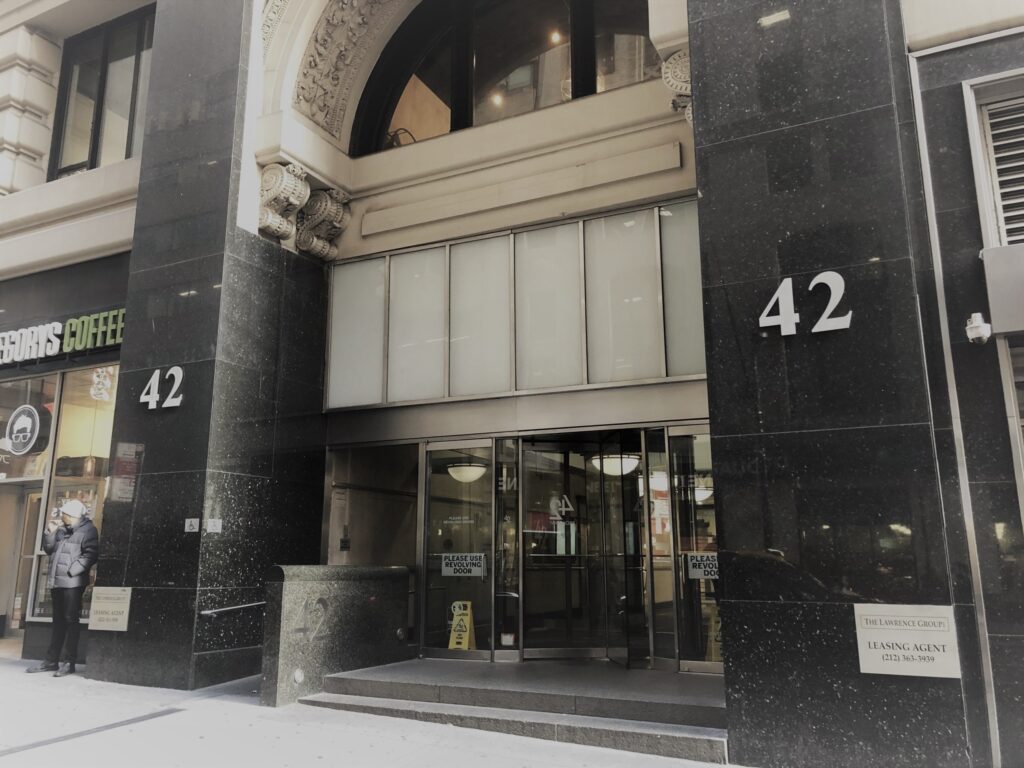
The nefarious drama took place, as it always does, at 42 Broadway in Manhattan, in the bleak hearing room of the Board of Elections. In this room, the 31 Republican candidates knew their fate was already determined. This is the factual account of 31 Republican candidates, running for public and party offices in Queens, who were recently thrown off the ballot for meaningless technicalities, thereby denying 130,000 registered Republican voters in Queens County, NY a choice in the upcoming June 22nd Primary Election.
A former commissioner revealed some of the shocking details of the insider protection racket at the top tiers of the Board of Elections and party organizations. According to the former insider, the commissioners, general counsel, the party bosses all collaborate to pre-determine the approved candidates to get on the ballot and who they want to knock off. These private “horse-trading” sessions occur prior to the public commissioners hearings, which are carefully pre-scripted to make sure the insurgent candidates do not have ballot access in their party’s Primary Election.
This is how the story played out. It began with 31 candidates seeking public and party offices under the Republican Party banner in Queens, but outside the auspices of the County Republican Party organization. The Queens County Republican Patriots (QCRP), a NYS multi-candidate political committee, supported their desire for public service with petitioning and other activities to meet the legal requirements to get on the ballot. Most of the candidates and their teams gathered several times the number of signatures required.
The County Republican Party sought to prevent the 31 candidates from getting on the ballot by filing General Objections against their petitions at the Board of Elections. Specifically, the county party charged that all the petitions should be invalidated, because of a listing of pre-printed Election District (ED) numbers in the blank space on the petition. The listing of ED numbers was not prohibited by NYS Election Law. Actually, placing the ED numbers on the petition does clarify which signers can legitimately sign the petition.
The Board of Elections General Counsel agreed with the County Republican Party objections and the Board of Elections clerk’s report, issuing a statement declaring the added ED numbers were an attempt to confuse the voters, thereby invalidating the petitions.
The county party also filed a lawsuit in Queens Supreme Court against the 31 candidates. It was an “Order to Show Cause” to invalidate the petitions and disqualify the candidates from appearing on the ballot. All candidates were served with lawsuits to appear in court taped to their doors late at night.
The commissioners hearing took place on April 14th at the Board of Elections. The Republican Patriots argued to the commissioners that the numbers on the face of the petition were valid and legitimate according to Election Law. The county party argued that the petitions are invalid, and thus the legitimate petition signatures of 3000 registered Queens Republicans were null and void. There was a brief give and take, interrupted abruptly by the Queens Republican Commissioner who accused representatives of the Republican Patriots of intentional deceit and recommended that they “move the clerks report” which they did. All commissioners summarily voted in unison with a 10 to 0 decision to declare the petitions invalid for incorrect markings. All 31 candidates were “removed prima facie because of invalidity of petitions.” You can see this segment of the hearing, which is on the BOE website for public viewing, at: https://vote.nyc/page/commissioners-meetings April 14, 2021, at 5:08:00.
Most people are unaware of the political process, but it’s vital to understand this well-guarded establishment secret, since it plays a major role in our destiny as a community, city, and a nation. We need to understand the process in order to fulfill our civic duties as citizens, and to restore honesty and integrity to our political system. This is a story of voter suppression that needs to be reported and understood.
The Republican Patriots hired the law firm of Harris Beach PLLC, to file a Petition to Validate, to reverse the flawed determination at the commissioners hearing and restore 18 of the original Republican Patriots candidates to the ballot. Harris Beach filed the lawsuit against the Board of Elections in Queens Supreme Court and the hearing in the Election Part was set for last Wednesday, April 21. After many roadblocks to prevent a hearing on the merits of the case, and a couple of adjournments, the Judge hasn’t as yet rendered a decision. At the present time of this writing, the county party’s attorney postponed the Petition to Invalidate until after the Judge’s decision. Thus, with the adjournments and requisite appeals, the legal battle continues indefinitely.
The Republican Patriots are determined to keep fighting in the courts to restore their candidates to the ballot, so that the merits of the case are heard. The system itself is not at fault. The process for candidates to get on the ballot was designed to reduce fraud, forged and duplicate signatures, in order to ensure honest elections. But it has been corrupted by malevolent people to hold on to power. They have perverted the system so that any scratch or marking can be a fatal defect, invalidating the entire petition, to knock outsiders off the ballot. There must be changes in the system to stop the present corruption.
The integrity of our local elections must be safeguarded. We are writing this so that people are aware of the problem and learn more about our system of democracy and freely participate in it. This issue is about our most urgent civic duty, the right to vote. People fought and died to preserve our system of voting and free and fair elections.
More people need to run for office, not less. The political process should be set up to advance the best candidates to be on the ballot. The voters should decide who runs for party and political positions, not ten bureaucrats in a closed room. The rank-and-file Republicans, Democrats, Conservatives, and Democratic Socialists of America must be free to express their views in the open marketplace of ideas and policies in America. In the greatest and freest country in the world, let the people choose who will represent their best interests. Stop the party insiders from abolishing the primary. Let the candidates run. Let the people choose!
______________________________________________
Phil Orenstein is the president of the Queens Village Republican Club. Established in 1875, it is America’s oldest Republican Club www.QVGOP.org. Historian, Jerry Matacotta, founder of History Seminar Series at Queensborough Community College and High School American History teacher, was the advisor for this article.
Editor’s Note: This is syndicated columnist Robert Golomb’s latest column as published in the news and media outlet, The Published Reporter
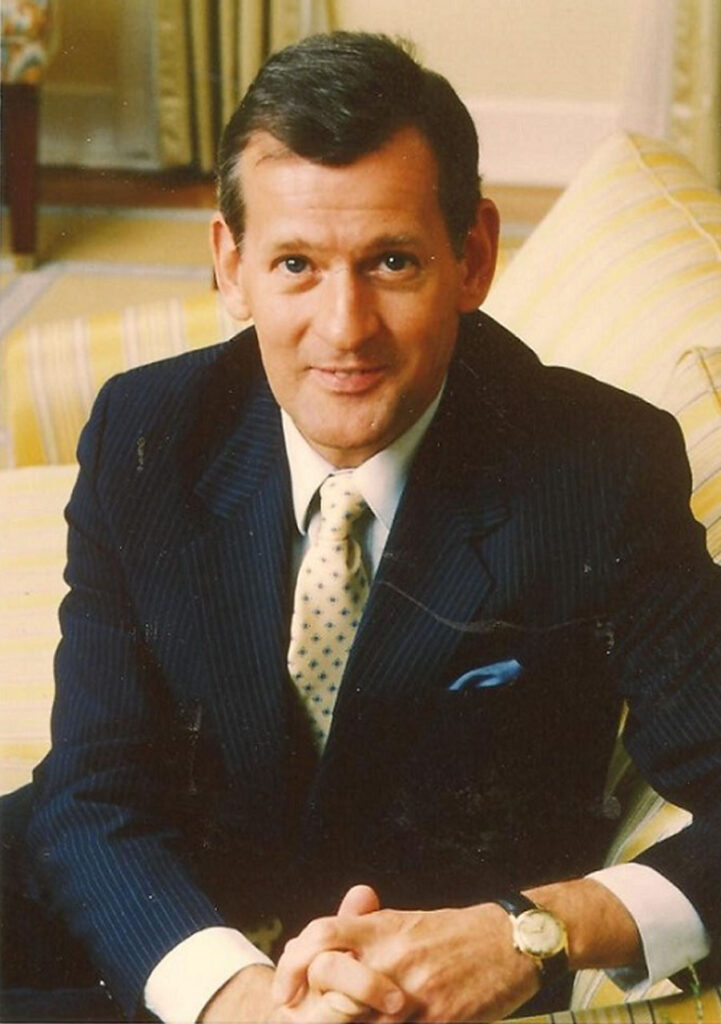
Photo of famed China historian, award-winning author and essayist, frequent broadcast media commentator and correspondent and Harvard PhD and professor, Ross Terrill, 82, at a Chinese Base, early 2000’s. Photo credit Ross Terrill.
NEW YORK, NY – The famed China historian, award-winning author and essayist, frequent broadcast media commentator and correspondent and Harvard PhD and professor, Ross Terrill, 82, received his first taste of living history when he was still a very young boy in his native Australia during the Second World War (1941-1945). “During World War II, America sent GI’s to Australia to defend her from what was feared to be a possible Japanese attack…. I was a toddler then, but I can still recall the soldiers tossing me candies wrapped in foil of brilliant colors,” Terrill told me during a recent telephone interview.
The attack never occurred. And, of course, America and her British, Russian and Canadian major allies defeated Germany by April 1945, and America, by then, mostly fighting on her own, overcame Japan five months, more than 100,000 American servicemen killed in action and two atomic bombs later.
The post war period in which he grew from childhood into young adulthood was a productive, though an uneven time, for Terrill. Between 1956-1957, he spent his freshmen year at Wesley College, but by the fall term, rather than going on to his sophomore year at the school, Terrill enlisted in the Australian Army where he served until the end of 1958.
“Putting my studies aside for a short period of time was no big matter to me…. I felt is was my honor and duty to serve my nation,” stated Terrill.
Upon his discharge from the army, Terrill, transferring from Wesley, enrolled in the University of Melbourne, and by his graduating senior year in 1961, applied his academic studies to a grave moral crisis facing his nation, as he became an outspoken political activist for the civil rights of the Chinese minority, who had been the victims of racism in Australia since their ancestors began their immigration to the nation during the 1851 gold rush.
“To be anti- Chinese was as Australian as the eucalyptus tree. Rumors ran that opium was fed to Australian children [by the Chinese]. Were the Chinese chefs not cooking lovely Australian cats for their dumpling,” asked Terrill sardonically.
To fight that bigotry, Terrill joined an anti-racism student group. He also wrote a letter published in a national newspaper, denouncing this anti-Chinese prejudice and expressing his hope that this bigotry was on the decline. As Terrill recalled, “My letter began [with the sentence], ‘Finally the attitude of superiority towards Chinese and other non-whites is losing ground in Australia.”’
Shortly after the letter was published, Terrill was faced with the harsh reality of hatred that his missive had spawned. “I got a surprise at the front gate of my family’s house in Melbourne,” Terrill recollected. “Fetching the bottles of milk, as I did each morning, I found large white-paint letters with the arrow pointing from the words in our gateway. ‘TRAITOR’ it said. ‘ROSS TERRILL IS A NATIONAL PERIL,’’’
Terrill proudly told me that he did not give in to that threat and continued fighting on behalf of the Chinese immigrants for many years to come. And that crucial anecdote was just one of many Terrill related to me at my request during our 60-minute interview. There were many other incredible stories to follow- all of which, including the latter, I had already learned about from having recently read his latest and 11th book, Australian Bush to Tiananmen Square.
But as I have learned from past interviews with other celebrated authors, you can gain a very special insight when you hear a great author talk about the great words he has written in his tome, and in the case of Terrill here, when he also shares his own very special auto-biography along the way.
“You want to know what I consider the highlights of Australian Bush to Tiananmen Square, let me begin by going back to my first visit to China in 1964,” said Terrill.
“I had taken time off from my graduate studies [at the University of Melbourne},” Terrill explained, “to have a first- hand understanding of the government, its view of other countries and also to learn about the people of that communist nation.’’
It was at a photo exhibition held in the city of Beijing, the nation’s capital, where, Terrill explained, he gained his first-hand understanding of how China’s communist regime viewed the most important of the “other countries,” America.
There was a photo exhibit called ‘Four Wicked Men,’ stated Terrill. “And the either taken out of context and, or, doctored photos showed [former presidents] Truman with a clenched fist, Eisenhower looking moronic, Kennedy [appearing] old and bewildered and [then current President] Johnson leering into microphones that resembled guns.”
When he told a China government official assigned to monitor the exhibit that he objected to the demeaning portrayal of these four American presidents, Terrill recalled that the official retorted, ‘These men are enemies of China. Consider their deeds. Their deeds are a caption of the pictures.”’
In Prime Minister Bob Hawke’s living room in Canberra Australia in 1986. Photo credit Ross Terrill.
The next event (probably better described as an edifying anecdote) contained in the book which Terrill referred to during the interview occurred in war-torn South Vietnam in 1965, the second full year of America’s war against the North Vietnamese Communist regime.
“During a respite from my graduate studies, I visited Saigon [the capital city of South Vietnam]. There I met a South Vietnamese official named Tien, with whom I had discussion which I have never forgotten,” Terrill stated.
“Tien, who had an aunt and uncle in Hanoi [the capital city of North Vietnam], told me,” Terrill elaborated, ‘If the allied forces had lost World War II to the fascists, it would be the fascists not the Communists, who would be ruling in China and East Europe.
“That intriguing speculation,” Terrill added, “led me to ask him a question which produced a very telling answer for a citizen of a country fighting a civil-war against the communists. When I asked Tien, ‘which was worse, fascism or communism,’ “he replied passionately in broken English, ‘both are worse. [But] if I had to choose I suppose I would choose fascism- it’s a dictatorship by an upper class; communism is dictatorship by lower class.”’
We last discussed Terrill’s visit back to China in July, 1971- at the time his approximately 12th visit to that nation, which he has visited about 80 times since. “I was a guest lecturer in government at Harvard back then, but I was able to find time to take a journey to Changsha, home city of [Chairman] Mao,” noted Terrill.
Explaining that his visit coincided with President Nixon’s historic diplomatic breakthrough with Chairman Mao and his Chinese Communist Party Government, Terrill stated, “I received a cable from the Washington Post, requesting articles on Nixon’s break through… My article, cabled from Changsha, appeared on the Washington’s Post’s front page on July 22nd.
“One of the points I made in the article,” Terrill elaborated, “was that the Chinese preferred to deal with Republicans rather than Democrats, because it was the Democrats (Truman and Acheson) who backed Chiang Kai-shek [the then leader of Nationalist China] to the end and who fought China in Korea. In addition, I wrote in the piece that according to Chinese officials I had met with, the Democrats were too ready for ‘collusion with Moscow.”’
A week later, after a long plane ride from South Vietnam to Boston, Terrill, who was to become an American citizen in 1979, was back in his apartment located near Harvard. However, whatever deserved rest he might have been enjoying was interrupted by a phone call he received from a high-level American government official who called to praise his Washington Post article.
“I picked up the phone and heard the voice of Henry Kissinger [then the U.S. National Security Advisor] himself on the other line,” Terrill recollected. “He told me that he liked what I had written in the piece… We spoke for a while and before he got off, I told Henry, ‘Beijing takes the change from President Johnson’s expansionism to Nixon’s prudence very seriously.”’
With that, our sixty-minute talk came to an end. However, there were so many additional historical events and anecdotes I had read in Australian Bush to Tiananmen Square, about which, had time permitted, I would have asked him to elaborate upon.
Ranging from his conversations in 1971 with Chinese Communist Premier Zhou Enlai about China’s history, economy, culture and political system; to his 1982 very candid talk with journalist Tang Na concerning his then former wife Jiang Qing, the future Madame Mao; to his 1988-1992 discussions with then President George H.W. Bush focusing upon America’s China policy; and, perhaps most importantly, to his first-hand account of the savagery that he witnessed in Tiananmen Square throughout the spring and in the early summer of 1989, I would have welcomed Terrill offering still further commentary about those, as well as the many other historical events he brilliantly chronicled in his must read memoir.
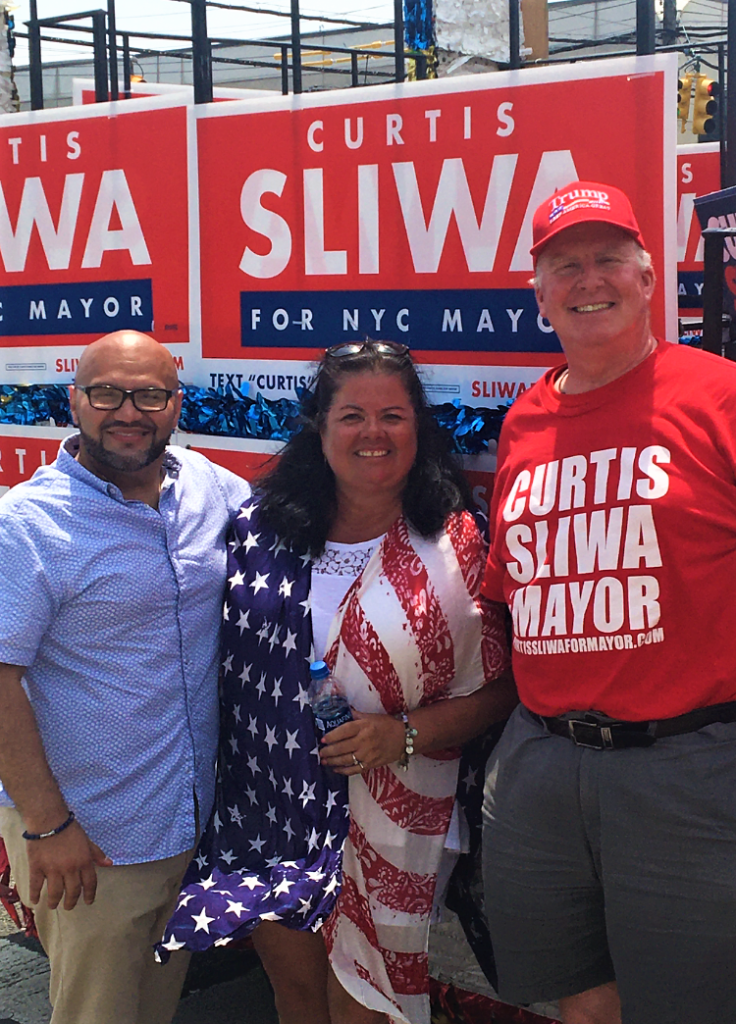
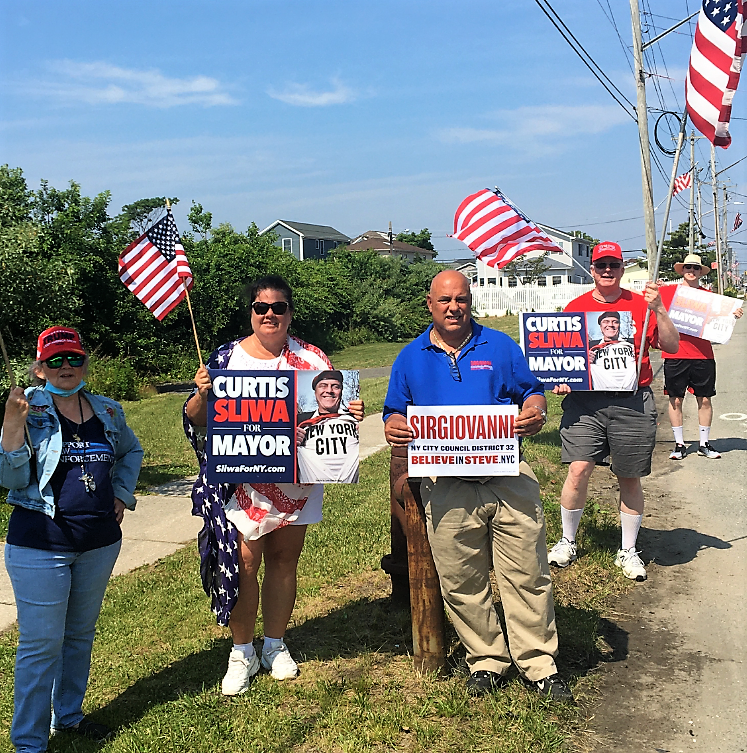
Curtis Sliwa for Mayor made several stops from morning to night on his barnstorming tour of Queens on Saturday June 19th. Here are some photos of the days action from Breezy Point and Floral Park, Queens.
Breezy Point photos with Steve Sirgiovanni for City Council and Rich Valdes, WABC Talk Show Host
Floral Park photos with Alex Amoroso, Republican candidate for City Council in District #23
It is my opinion that Civics textbooks today are carefully skewed toward the “New Globalist World Order”. They undermine our Constitution and eat away at the fabric of our Constitutional Republic. This must be addressed as quickly as possible. The only way to do this is to examine K-12 Civics Standards, State by State.
I believe that we will definitely find that the K-12 Standards of many States do not have as their purpose to create good American citizens or strengthen American citizenship. Their language will be globalist. We have wrongly assumed that the Publishers have “their own agenda,” have created the subversive textbooks and then sold them to naïve States, unaware of the content. The truth is that persons in the Departments of Education and State Boards of Education have created the new anti-American roadmap in their State Civic Standards, which are then given to the Publishers.
K-5 Standards often fail to identify that we are a Constitutional Republic and not a Democracy. They do not teach the Pledge of Allegiance to our Flag, the National Anthem, the names of the first Presidents and their contributions to the founding and early development of this country. They omit the Hebrew Bible as one of the sources for the principles of the Constitution and the Judeo-Christian Tradition upon which our Nation was founded.
6-8 Standards often fail to provide the steps needed to develop young people who support the Constitution of the United States and who are strong advocates for our Nation and for the Judeo-Christian Tradition upon which it was founded. There is a failure to use or include the terminology Constitutional Republic and to teach why our Founding Fathers created America as such. The fact that Standards acknowledge and teach the role of ancient Greek and Roman civilizations in the shaping of the Constitution but fail to identify that of the Hebrew Bible leads to the question if they promote anti-Semitism in and by our educational system. There is no indication that students use Original Documents/Sources. Finally, there is a peculiar disdain for the Constitution, the Bill of Rights, and the Founding Fathers, found in their spelling with lower case letters.
9-12 Standards fail our students who are finishing public school. 9th -12th grades are the final opportunity to prepare them to live, vote, make and abide by certain political and behavioral choices, according to the Law of the Land, which they appear not to have studied and therefore cannot respect. Again, these Standards fail to teach what it means to be a Constitutional Republic and not a Democracy. They once again omit the Hebrew Bible as a source for the principles of the Constitution and also the Declaration of Independence. There is no insistence upon use of Original Sources/Documents. There is the same peculiarity of using lower case letters when referring to the Constitution, the Amendments to the Constitution, Rule of Law, etc. Some Standards do not use the Amendments to the Constitution to teach the students their roles in society and how to effect change legally and without violence.
Many Standards do not teach the difference between such forms of government as Monarchy, Democracy, Theocracy, Republic, Oligarchy, Marxism, Capitalism, Totalitarianism. Therefore, they do not protect our students from indoctrination and prepare them to defend our Constitutional Republic against all enemies, at home and abroad.
Without a correct, accurate and pro-American Civics education, there will be no way to “take back” America. We have taken our first successful step in this battle for establishing viable Civics Education. The K-12 Civics Standards, which we have submitted to the State of Florida, contain all of the missing items described above and return our Constitutional Republic, our Constitution and our Rule of Law to their proper place.
Dr. Sandra Alfonsi is Senior Academic Fellow for Proclaiming Justice to the Nations and Truth in Textbooks. She was featured speaker at our May 6, 2021 club meeting on Saving America’s Schools, and you can view the video on our website here: https://qvgop.org/video-may-qvgop-club-meeting-on-saving-americas-schools/
By Frederick R. Bedell Jr., Grand Knight of St. Anastasia Knights of Columbus Council #5911
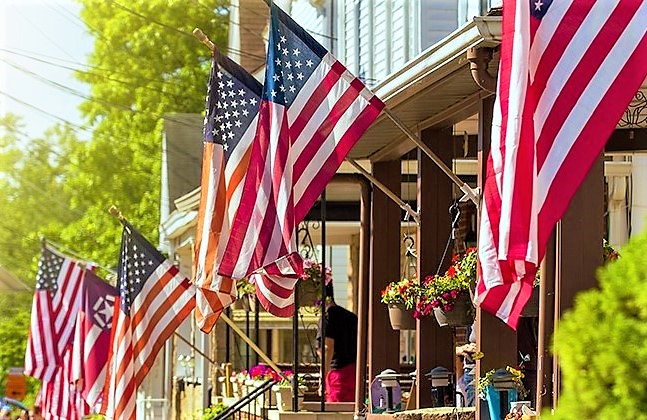
The American Flag was originally adopted by a resolution of the Continental Congress on June 14th, 1777. Flag Day wasn’t officially recognized until proposed by Congress and signed into law by President Harry Truman in 1949. The week of June 14th is designated as, National Flag Week.
As a member of the American Legion Post # 103 in Douglaston and as Grand Knight of St. Anastasia Knights of Columbus Council # 5911 also in Douglaston, I therefore urge that the American Flag be displayed outside homes, apartments, offices, businesses and stores throughout the United States. We do this to honor all that our great nation represents, which is freedom, equality, and justice for all. These principles and ideas are embodied in the American Flag. We should do this also to show honor and respect for all our brave men and women who are serving our nation today. And also all those over the years who gave their lives to preserve our cherished freedoms.
Our American Flag is the fabric of our country and by flying the American Flag we can be reminded that we can prevail against all adversity. So please fly the American Flag on Monday, June 14th and remember this too: These colors of red, white and blue don’t run. Now God bless America!
Opponent Ariola uses political tricknology to ride on Sliwa’s soaring popularity toward the June 22nd Republican primary
Although the Queens County GOP is supporting Fernando for Mayor, it looks like Chairwoman Joann Ariola prefers to associate herself with Curtis Sliwa to give the impression they are running as a team.
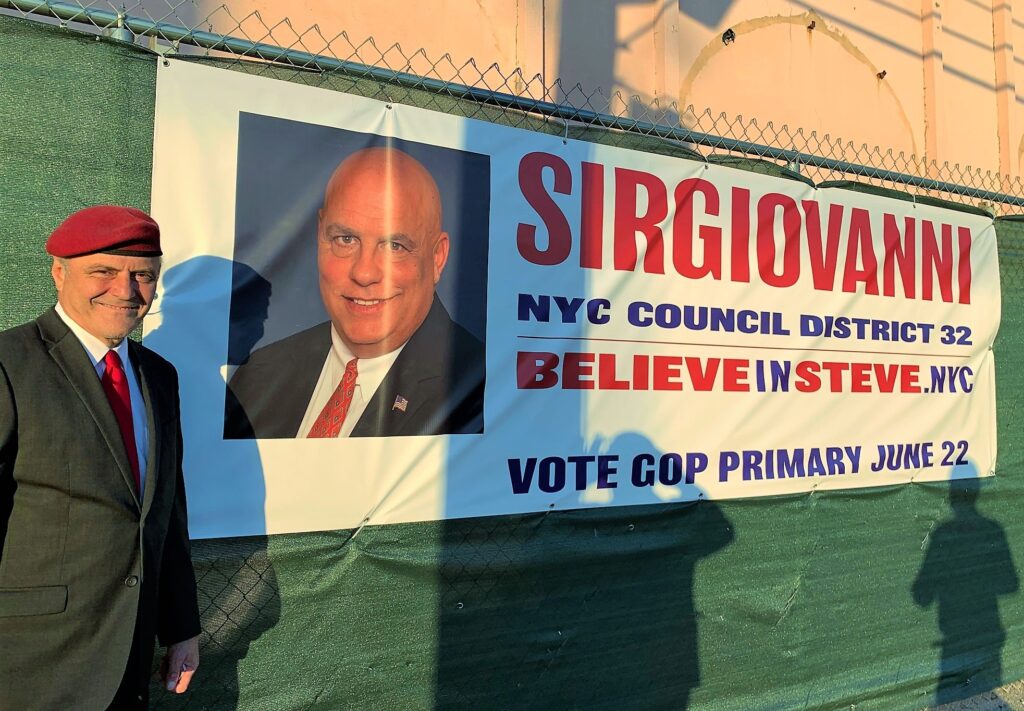
Curtis said: “Last night I had a fundraiser at Prima Pasta on Cross Bay Blvd. in Howard Beach. In the window was a small sign for Ariola. I asked them to take it down and instead walked across the street to the largest political banner of this political cycle for our Patriot City Council candidate Steve Sirgiovanni. I let everyone know that I was supporting Steve and not Ariola. Ariola is putting up signs wherever there are Sliwa signs and is trying to attach herself to My candidacy.”
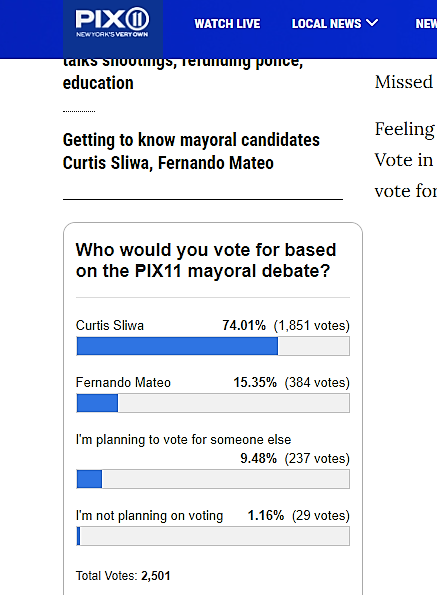
We can understand Ariola’s shunning of Mateo, who has no signs in Howard Beach, and her use of political tricknology to attach herself to Sliwa especially after Mateo’s abysmal performance in last Thursday’s PIX11 Republican mayoral debate, and the ensuing PIX11 Mayor’s Race Poll showing Curtis crushing Mateo 74% to 15%.