Be there to speak
out:
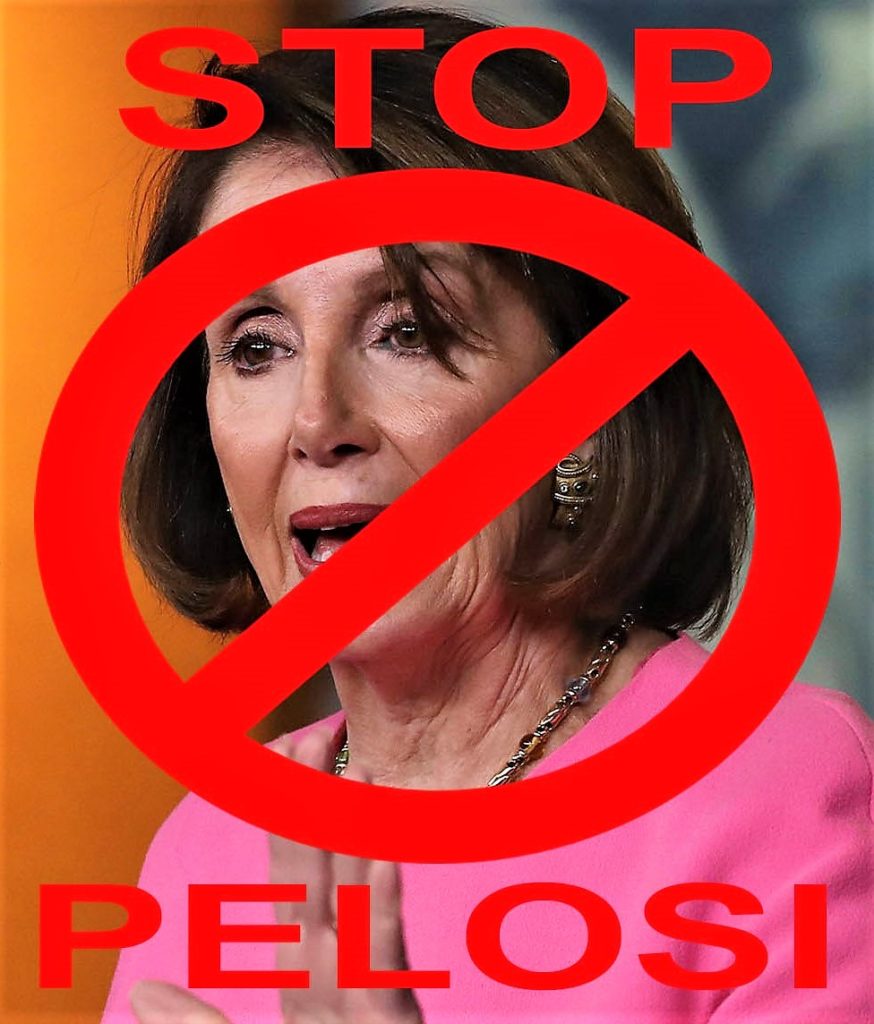
Stop Pelosi’s lies and obstruction.
Tell her to stop thwarting President Trump’s agenda to Keep America Great!
Tell her that we support President Trump and his America First policies.
Tell her that her Party has been taken over by extreme leftist lunatics,
anti-American, anti-Semitic, Anti-Christian traitors and socialists.
Tell her “Build the Wall”
Stop illegal immigration
Save our city, state, and country
Speak up and get organized. Take back New York City.
“Only 7 Black
Students Got Into Stuyvesant, N.Y.’s Most Selective High School, Out of 895
Spots,” blared the headline in The New York Times. Eliza Shapiro’s
March 18 article caused a hurricane of media-driven rage and rendered the
Leftist Twitterati apoplectic. Predictably, NYC Mayor Bill de Blasio (D) and
Gotham’s Schools Chancellor Richard Carranza used this occasion to split the
Big Apple along racial lines. They renewed their call to eliminate the
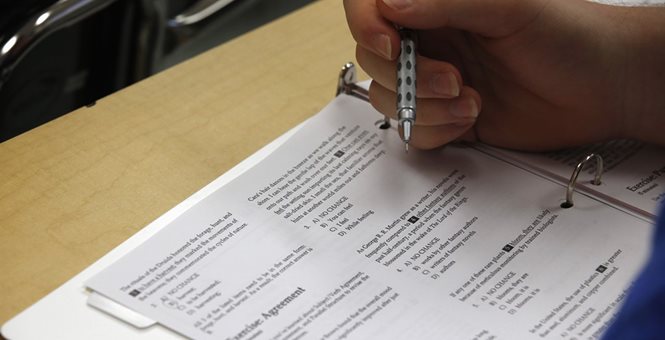
Specialized High School Admissions Test (SHSAT), which measures students’
preparedness for Stuyvesant, Brooklyn Tech, Bronx Science, and New York’s other
Specialized High Schools. Since the SHSAT is written into state law, its fate
lies with policymakers in Albany, not with the mayor or his equity-obsessed
de-education chancellor.
Pro-SHSAT advocates loudly and persistently have defended
the objective, merit-based exam. In response State Senator John Liu (D –
Queens), chairman of the NYC Education Committee, announced a series of
listening sessions titled “School Diversity and Specialized High School
Admissions Community Forums.” Liu promised such a gathering in each of Gotham’s
five boroughs.
Pro-SHSAT parents and alumni dominated hearings in Queens
and Brooklyn, with few anti-SHSAT activists in attendance. In contrast to the
SHSAT supporters’ calls for consistent, standardized tests, SHSAT detractors
argued that diversity through race-based admission would provide better
education.
SHSAT fans showed up in force for a conclave in the Bronx
last month. Liberal, elitist SHSAT opponents largely stayed away. Perhaps
traveling to New York’s lowest-income borough was too far a leap from their
cushy bubbles in Manhattan and Brooklyn’s tonier precincts.
Unexpectedly, black Bronxites tried to slap the city to its
senses. They defended the SHSAT and shared inspirational stories of how it
opened doors for them.
Eleanor George, a Bronx resident and Bronx Science alumna,
applauded the test. She recalled her years at I.S. 131, known more warmly as
The Albert Einstein School. Located in the Bronx’s Soundview neighborhood, this
middle-school campus was mainly black and Hispanic. Many students there called
the nearby projects home. George remembered a guidance counselor visiting her
class and “lauding the praises” of vocational high schools. When George went home
that day, she told her mother that she aspired to attend a vocational high
school.
The next day, her mother confronted the Einstein School’s
principal: “How dare you only offer vocational high schools” to George and her
classmates. The guidance counselor soon returned to the class and told students
about the Specialized High Schools, including Bronx Science. Einstein offered
George and some of her classmates free test-preparation lessons in the morning,
before school. George scored very high on the SHSAT. She was accepted to Bronx
Science’s Class of 1978, as was her friend who lived in a housing project and
achieved that year’s highest SHSAT score. George pondered what her friend’s
fate would have been if her mother had not advocated for her.
George, who became a teacher, also said that many Bronx
Science students in the 1970s received the same test-preparation courses that
she did. Restoring such instruction, she argued, would have positive results
for many black students who are improperly nurtured today.
Next, Joan Cargill, a Bronx Science alumna, took the stage
at Liu’s May 17 forum. Cargill addressed “Inspiration, being inspired, the lack
of inspiration, and the need to bring it back.” She spoke about growing up in
the Bronx as the daughter of Jamaican immigrants. Cargill, then 9, learned that
a friend’s cousin was accepted to Bronx Science. This news inspired her to
attend the school that yielded eight Nobel Laureates. “The test can’t go away,”
Cargill pleaded. “In a society where everyone wins a trophy, all I had was the
test. My parents had no money. It was the competitiveness I needed, as a girl
whose parents worked all the time.”
A black woman named Lisa Benton told a story that could make
an actuary cry. And it did.
Benton explained how her uncle, the son of a Savannah,
Georgia sharecropper, took Stuyvesant’s test in 1932. He did well and was
accepted. However, the admissions officers scoffed at the notion that a
sharecropper’s son could possess such smarts. So, the young man had to re-take
the exam. The farmer’s son met the required score and entered one of NYC’s most
successful anti-poverty institutions.
“If he could pass this test in 1932,” Benton said, “I know
in 2019, kids of color can pass this test.” Seeing this man’s niece so
eloquently tell this tale movingly confirmed that Specialized High Schools
elevate New Yorkers, so that they and their progeny can climb to previously
unimaginable heights.
“Hearing Lisa Benton’s story brought tears to my eyes,” said
Jon Roberts, a local actuary, mathematician, and education-reform activist.
“Her uncle struggled to overcome the injustice and discrimination that were so
prevalent in 1932. He earned the right to attend Stuyvesant through study and
hard work, despite being poor and black during the Great Depression.”
Roberts added, “If admission were determined by subjective
criteria, then he never would have been admitted to Stuyvesant, despite being
qualified. But the test-only policy defeated anti-black racism and let Lisa’s
uncle attend. Only a test can overcome human bias. We must keep the test-only
policy for the Specialized High Schools.”
As for School Chancellor Carranza, he told the New York
State Assembly Education Committee last month: “I refuse to believe there are
no smart black and brown children.” Too bad he is so race-obsessed that he
cannot let these precocious children meet their natural-born, God-given
potential. Instead, he plays race-based numbers games with their future.
Carranza also counts adult racial beans, often at the
expense of “implicitly biased” Caucasians. As a New York Post headline
put it, “White Out: Carranza ‘demoted’ execs because ‘of their skin color.’”
For Carranza, race, not classroom excellence, is the primary factor in
Department of Education employment decisions. New Yorkers will learn plenty
more about Carranza’s color-driven worldview as he defends himself in a $90 million lawsuit filed by three white, female DOE employees. They
claim that Carranza denied them promotions and, instead, offered them to
allegedly less-qualified minority staffers.
At the same State Assembly hearing, Public Advocate Jumaane
Williams (D – New York City) testified that eliminating the SHSAT is like
“Saying your kids are too dumb to pass,” which “makes people believe their
communities are somehow dumber than others.” The uplifting Bronx tales shared
at Liu’s forum would prompt anyone who heard them to fight against Carranza’s
anti-SHSAT jihad, which is built on an assumption of black and Hispanic
intellectual incapacity.
Meanwhile, de Blasio has abrogated his mayoral duties to
pursue a self-humiliating presidential bid. A recent survey revealed that he
enjoys the support of 0 percent of Democrats and, among 600 Iowans
polled, not even one wanted him, even as a second choice.
Instead of romping through Iowa corn fields, de Blasio should have sat in
Lehman College’s Lovinger Theatre in the Bronx. He might have been moved to
fire Carranza and install someone ready for the hard work necessary to repair
Gotham’s dysfunctional government schools. America’s largest city desperately
needs a leader who can address the rampant under-education of so many black
boys and girls, abandon twisted policies that push them down in the name of
equity, and, instead, lift every child — up, up, and away.
Manhattan-based political commentator Deroy Murdock is a Fox
News contributor and a senior fellow with the London Center for Policy Research.
Queens-based education reformer Charles Vavruska is a parent activist and
evangelist for the local Specialized High School Admissions Test.
Posted: Thursday, June 13, 2019 10:30 am | by Michael Shain Editor
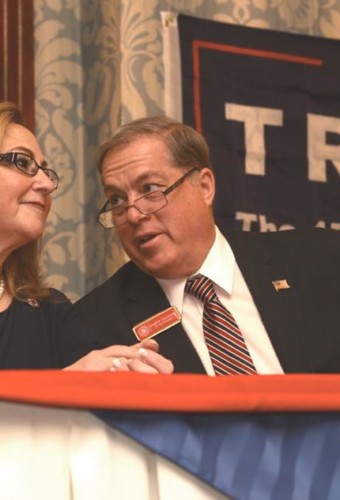
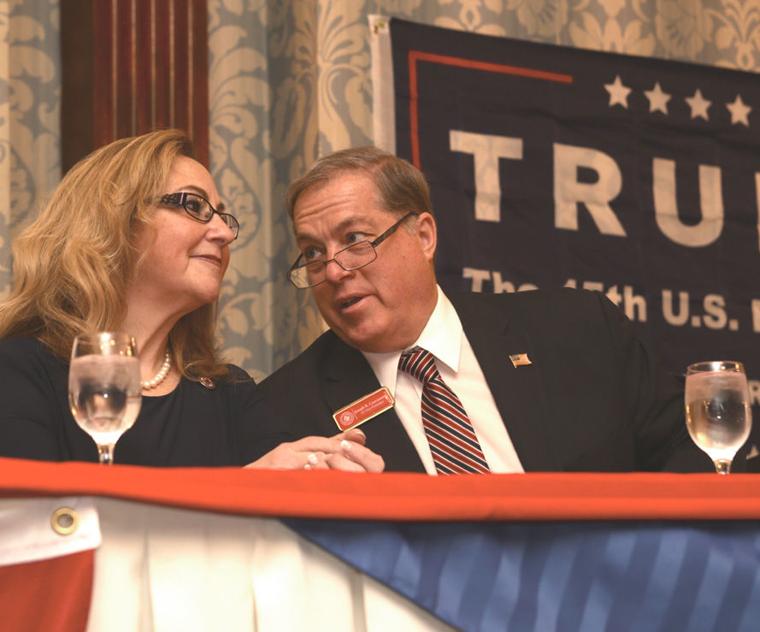
PHOTO BY MICHAEL SHAIN Joe Concannon, first vice president of the Queens Village Republican Club, chatted on the dais of the Lincoln Dinner, the group’s biggest event of the year, with Jamie Ulloa, an education activist.
Once upon a time, not that long ago, Republicans wandered the streets of Eastern Queens like wildebeest on the Serengeti.
As far as the eye could see, supporters of Dwight Eisenhower, Jacob Javits and Nelson Rockefeller lived, shopped and voted in the neighborhoods along the Nassau County border. Occasionally, they even won an election.
“This was a heavily Republican area,” said James Trent, the chairman and unofficial historian of the Queens Village Republican Club.
Back when New York City had a two-party political climate, the eastern half of Queens usually sent Republican lawmakers to the City Council and Albany.
The explanation was simple, said Trent. Queens Village is a neighborhood of single-family homes and, time was, “homeowners were traditionally more Republican than apartment dwellers.”
When the Queens Village Republican Club was founded in 1875, the name Queens Village didn’t even exist. The area was called Brushville.
The only thing that hasn’t changed since then is the name Republican and the turbulent style of party politics in Queens.
Just 20 years ago, the GOP club that claims to be the oldest in America came perilously close to going under altogther.
The story of its comeback is a variation on the Horatio Alger tale that Republicans so love to tell.
By the early 1990s, the Queens Village Republican Club was down to just four members, said Trent. Bill Clinton was president and there was widespread speculation that Republicans in a few short years would go the way of the Bull Moose Party.
“Between 1990 and ’94, it didn’t meet at all,” he said. “It never disbanded. It was just dormant.”
It was the Queens Village Catholic War Veterans in Bellerose that seemingly saved the group by hosting a QVGOP meeting at its headquarters and inviting all its members.
“About 70 people showed up and that was the beginning,” Trent said.
Shortly after, the Republican group discovered three other nearby clubs from Fresh Meadows, Bellaire and Bellerose that were experiencing the same thing.
“There’s nothing worse than going to meeting where six people show up,” said Trent. “It makes you feel like you’re on the fringe.”
The groups elected to merge with the QVGOP.
“Now,” he said, “we’re a serious club.”
Political clubs date back to the French Revolution. They are informal groups of like-minded people who gather to talk about the issues of the moment, usually with the goal of influencing elections or officeholders.
They are also natural breeding grounds for outsiders who want to seek public office.
In that way, they are like the tide pools of American politics, where ideas and political talent is spawned.
“We became a political club again when we started running people for office,” said Joe Concannon, a retired NYPD captain who is the club’s first vice president.
Concannon was among a handful of club members who have jumped into the election fray as candidates for the City Council and the state Assembly.
The club has yet to field a winning candidate but every time it runs someone, said Concannon, “it brings people to the club.”
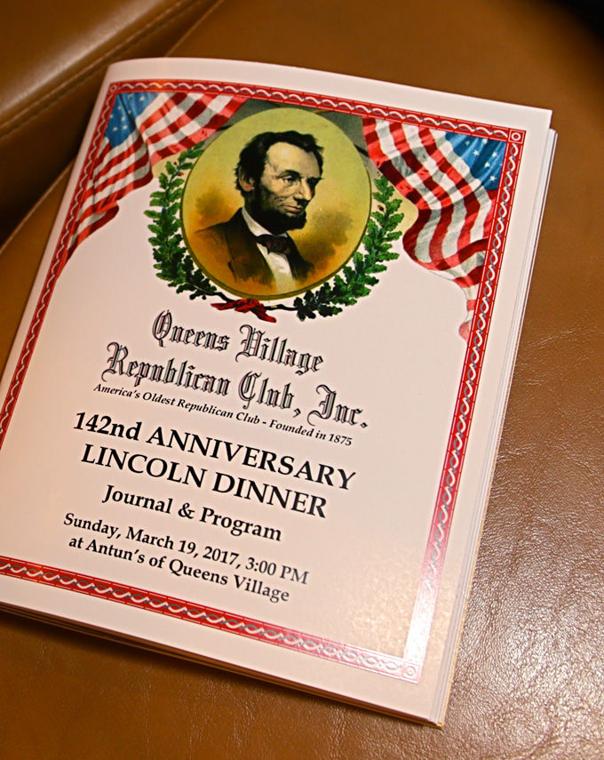
The Lincoln Dinner is a rare showcase for local conservatives.
The centerpiece of the QVGOP’s year is the annual Lincoln Dinner in early spring.
It not only is the group’s main fundraiser, but a showcase for conservative office seekers.
Assemblywoman Nicole Malliotakis (R-Staten Island, Brooklyn) kicked off her campaign for mayor there two years ago with a stemwinder speech outlining Bill de Blasio’s liberal shortcomings.
Before Bob Holden (D-Middle Village) challenged and upset incumbent Elizabeth Crowley in the City Council primary election of 2017, he spoke at the Lincoln Dinner about how his plan for reshaping city government to boost small businesses and middle-class homeowners and accepted an award.
Since the 2016 presidential election, the Lincoln Dinner has been a whistle stop for some of the Trump campaign’s most colorful personalities.
For figures like political consultant Roger Stone (who brought longtime friend Kristin Davis, the Manhattan Madam, as his date) and Trump’s campaign spokesman Corey Lewandowski, the dinner is a rare chance to appear before a sympathetic crowd inside the city limits of deep-blue New York.
Trent traces the origins of the Lincoln Dinner back 144 years, before the city was consolidated into five boroughs and Queens was included in what became Nassau County. What is now eastern Queens was largely farmland.
The dinner was the first thing the revitalized QVGOP club got going again.
“Sixty-one people came to the first dinner in 1995,” said Trent. “The last one, we had 350.”
While all this was happening, the ethnic makeup of Queens Village itself was changing, seemingly by the week.
Once a German, Irish and Italian neighborhood,it became home to large numbers of South Asian, Chinese, Hispanic and West Indian families.
The demographics did not look good for the QVGOP until, near the end of the 1990s a club calling itself the Haitian American Republican Coalition approached the QVGOP looking for a new home, said Trent.
“Many of them were doctors who had fled Haiti” and felt no affinity for Bill Clinton and the Democrats, he said.
“They wanted to be with the Republicans, and we embraced that,” said Trent.
“If you’re an immigrant, there’s this assumption you are on welfare and that you want freebies and handouts. You can’t get farther from the truth,” he said.
The QVGOP began seeking out more immigrant groups, one at a time.
Koreans were next, then Georgians (the once-Soviet kind) and Pakistani Christians.
“We started asking them, ‘We know how you feel about a lot of issues, so why are you Democrats?’” Trent recalled. “And they said: ‘Because they asked us. You didn’t.’”
Recruiting like-minded immigrants, he said, sets the Queens Village club apart from much of the rest of the party.
“A lot of people are not used to the way we do things here,” he said. “Where they come from, you criticize the government, you disappear.
“That’s why we have to reach out.
“I know people think Republicans are just a bunch of old white people. And maybe it’s that way in some parts of the country. But not in our club.”
The Rev. Tariq Rehmat, president of the United Pakastani-American Christian Community in Queens Village, was drawn to the club in 2016, he said, because it supported Trump, as he and his organization did.
“American values are not what is going on in New York right now,” he said. The people he met at his first QVGOP meeting were “totally different” than New Yorkers had known since immigrating here 20 years ago.
“I have brought a lot of Democrats to change registration to Republican,” Remat said proudly.
Concannon believes the QVGOP is “the most ethnically diverse Republican club in the state, maybe the United States.”
TUESDAY IS THE DAY PRESIDENT TRUMP WILL FORMALLY ANNOUNCE HIS 2020 RE-ELECTION CAMPAIGN. COME CELEBRATE TOGETHER WITH PATRIOTS THROUGHOUT AMERICA TUESDAY AT TRUMP TOWER AND THE AFTER-RALLY PARTY!
MAGA
QUEENS TRUMP 2020 RE-ELECTION KICKOFF PARTY!!
TUESDAY 8:00PM, JUNE 18, 2019 ANCHOR
INN 59-30
GRAND AVE., MASPETH, NY 11378
COME CELEBRATE TOGETHER WITH PATRIOTS THROUGHOUT AMERICA AFTER THE TRUMP TOWER RALLY!